Your Journey to Success: The Power of a Weight Loss Log Book
Embarking on a weight loss journey is a significant commitment to your health and well-being. It's a path filled with personal discovery, discipline, and, sometimes, unexpected challenges. While motivation provides the initial spark, consistency and clear tracking are the fuel that keeps you moving forward. In the modern landscape of health and fitness, one tool stands out for its simplicity and profound effectiveness: the Weight Loss Log Book. This isn't just a notebook; it's a structured companion, a personal accountability system, and a map of your progress. For authors and creators looking to support this journey, designing a professional Weight Loss LogBook for KDP Interiors offers a valuable resource to the community.
Understanding the Core Purpose of a Weight Loss Log
At its heart, a weight loss log book serves a fundamental purpose: to transform intangible efforts into tangible, measurable data. Weight loss is rarely linear. It involves a complex interplay of diet, exercise, hydration, sleep, and mindset. Trying to manage all these variables by memory alone is like navigating without a compass. A log book provides that compass.
Its significance lies in several key areas. Firstly, it fosters awareness. Writing down what you eat, when you exercise, and how you feel creates a conscious connection to your habits. This awareness is the first step toward change. Secondly, it enables accountability. When you record your actions, you are holding yourself accountable to your goals. This personal record is honest and non-judgmental, but it is unequivocally truthful. Finally, it provides motivation through visualization. Seeing your progress over weeks and months—the downward trend in weight, the increase in workout intensity, the consistency in healthy choices—is a powerful visual reinforcement that your efforts are working.
From Blank Page to Structured Success: What Goes Into a Log Book?
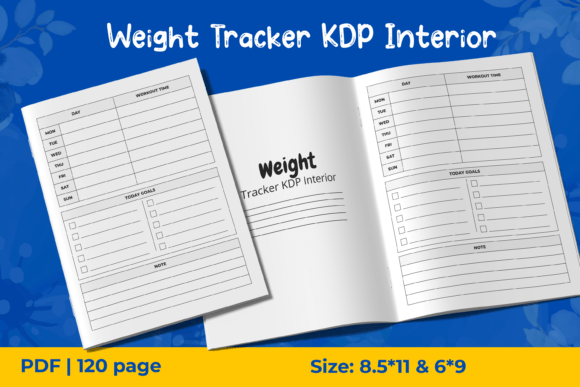
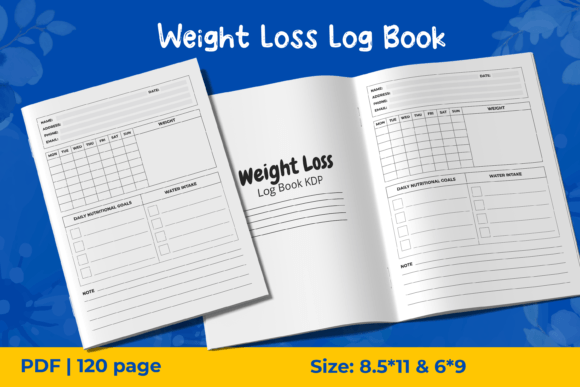
A well-designed log book goes beyond simple blank pages. It offers a structured framework that guides the user, reducing the mental effort needed to track effectively. Common sections include:
- Daily Food & Drink Intake: Space to log meals, snacks, water consumption, and even calorie estimates.
- Exercise & Activity Tracker: Details of workouts, duration, intensity, and type of activity.
- Weight and Measurement Logs: Weekly or bi-weekly entries for weight, body measurements, or progress photos.
- Mood and Energy Level Notes: A place to jot down how you felt physically and emotionally, linking habits to well-being.
- Goal-Setting Pages: Sections for defining short-term and long-term goals, and reflecting on achievements.
- Weekly Reviews: A summary area to assess the week's successes, challenges, and lessons learned.
This structure turns a daunting process into a manageable daily routine. It clarifies the often murky process of "how to lose weight" into clear, actionable steps.
The Modern Relevance: Fit for Today's Lifestyle
In our fast-paced, technology-driven world, the analog simplicity of a paper log book holds a unique and vital place. While apps and digital trackers abound, a physical book offers distinct advantages. It requires intentionality—the act of writing engages the mind more deeply than a quick tap on a screen. It is free from digital distractions and notifications. It becomes a personal, private artifact of your journey, something you can hold and reflect upon.
It fits seamlessly into daily life. You can keep it on your kitchen counter to log meals, by your gym bag to record workouts, or on your bedside table for evening reflections. In the context of modern wellness, which often emphasizes mindfulness and intentional living, a log book is a perfect tool. It encourages you to pause, reflect, and record, integrating the weight loss process into your daily rhythm rather than treating it as a separate, stressful task.
Clarifying Common Misunderstandings
There are a few common assumptions about weight loss logging that deserve clarification.
First, some believe it is only for the obsessive or data-driven. In reality, a log can be as simple or detailed as the user wishes. The primary benefit is consciousness, not perfection. Missing a day's entry isn't a failure; it's part of the human journey recorded in the book itself.
Second, people often think tracking is only about punishment or restriction. A good log book framework encourages positive reinforcement. It includes spaces for celebrating non-scale victories—like feeling more energetic, sleeping better, or achieving a new personal best in exercise. It shifts the focus from pure weight loss to holistic health improvement.
Finally, many assume digital tools are inherently superior. While apps are convenient, a physical book provides a tactile, uninterrupted experience and serves as a lasting keepsake of a transformative life chapter. Both have value, but the log book offers a focused, mindful alternative.
Creating a Resource: The Details of a KDP-Ready Weight Loss LogBook Interior
For those looking to publish and provide this valuable tool, understanding the technical requirements for a professional product is key. A Weight Loss Log Book KDP Interior must be designed with both the user's experience and the platform's specifications in mind.
The standard dimensions for such a book on Amazon KDP (Kindle Direct Publishing) are often 8.5" x 11" for a larger, easy-to-write format or 6" x 9" for a more portable size. The interior must be crafted as a high-resolution, print-ready PDF. This means all graphics, lines, and text are crisp and clean at 300 dpi (dots per inch), the standard for quality printing.
A critical technical note is that the interior must be designed with BLEED. This means background elements or borders that are intended to reach the edge of the page must extend slightly beyond the trim line to ensure no unwanted white edges appear after the book is printed and cut. This is a non-negotiable standard for professional print-on-demand books.
The entire package—typically 120 pages of structured logs, goal sheets, and inspirational elements—is bundled into a single, tested PDF file. This file is then ready for direct upload to KDP, where it can be paired with a cover design to create a complete, physical or digital paperback product. The value here is in providing a tested, ready-to-use template that saves others the time and effort of creating their own, allowing them to focus immediately on their health journey.
Examples in Practice: How a Log Book Transforms the Journey
Consider a beginner who starts a new diet and exercise plan. Without tracking, they might feel discouraged after three weeks if the scale hasn't moved much. But with a log book, they can review their entries and see tangible progress: they've consistently exercised 4 times a week for the first time in years, their water intake has doubled, and their energy levels in the afternoon have improved significantly. The log book reframes "success" beyond just weight.
For the more experienced individual, the log becomes a sophisticated tool for optimization. They might track specific macronutrients alongside workout performance to fine-tune their nutrition for better results. They can identify patterns—perhaps weight plateaus occur when sleep drops below 7 hours—leading to targeted adjustments. The book becomes a personalized health research document.
Building a Broader Understanding: The Log Book as a Lifelong Tool
Ultimately, a weight loss log book teaches a broader skill: the skill of self-observation and intentional living. The principles it instills—awareness, consistency, data-driven decision making, and celebrating progress—are applicable far beyond weight loss. They can be transferred to managing finances, learning a new skill, planning creative projects, or achieving any long-term goal.
It demystifies the process of change. By breaking down a monumental goal ("lose 30 pounds") into daily, manageable actions ("eat a vegetable with every meal, walk 30 minutes today"), it makes achievement feel possible and predictable. It empowers the individual with evidence of their own capability.
Whether you are a person seeking a structured path to better health, or a creator aiming to publish a supportive, professional resource like a KDP Interior, the weight loss log book represents a bridge between intention and outcome. It is a testament to the idea that the most powerful tools for change are sometimes the simplest: a pen, a page, and the commitment to write your own story of progress, one day at a time.