Your Journey, Measured: The Power of the Weight Tracker Book for KDP
In the quest for health and wellness, tracking progress is not just a motivational tool; it is a foundational strategy. Whether aiming for weight loss, muscle gain, or simply maintaining a healthy equilibrium, consistent monitoring provides the data needed to make informed decisions. For authors and creators looking to support this journey through Amazon’s Kindle Direct Publishing (KDP), a meticulously designed Weight Tracker Book Interior is more than a product—it is a companion for countless personal transformations. This article explores the anatomy, purpose, and significant role of these ready-to-use interiors, explaining why a professional, print-ready template is a crucial asset for both the end-user and the KDP publisher.
The Core Purpose: From Data to Empowerment
A weight tracker book, at its essence, is a dedicated space for logging daily, weekly, and monthly metrics related to body weight, dietary habits, exercise routines, and often, personal reflections. Its primary purpose transcends mere record-keeping. By providing a structured format, it transforms scattered numbers and notes into a coherent narrative of one’s health journey. This visual and tangible record helps identify patterns—perhaps a correlation between sleep and weight fluctuation, or the impact of certain foods on energy levels. For the user, it turns an abstract goal into a manageable, data-driven process.
For the KDP publisher or author, offering a high-quality interior fulfills a market need for tools that promote accountability and clarity. In a world saturated with digital apps that can feel impersonal or distracting, a physical book offers a focused, tactile experience. It signifies commitment. Users who purchase such a book are making a deliberate choice to engage deeply with their goals, and the interior design you provide becomes the framework for their success.
The Significance of Professional Interiors in Self-Publishing
Amazon KDP has democratized publishing, allowing anyone to create and sell physical books. However, the quality of the interior file directly impacts customer satisfaction, reviews, and ultimately, sales. A professional Weight Tracker Book Interior for KDP is not simply a collection of blank pages or basic tables. It is a thoughtfully crafted document engineered for both aesthetic appeal and functional utility. This is where the provided details—like dimensions, high-resolution quality, and bleed—become critically important.
Consider a reader opening their newly purchased weight tracker. A blurry graph, misaligned margins, or a cramped logging space immediately diminishes the experience and perceived value. Conversely, a clean, spacious, and print-perfect interior encourages use and fosters a positive connection with the product. It builds trust. The publisher, by providing a tested, ready-to-upload PDF, is not just selling a book; they are offering a reliable tool that respects the user’s important journey.
Deconstructing the Key Details: What Makes an Interior Ready?
Let’s explore the specific attributes mentioned, as each plays a vital role in the book’s creation and final quality.
Dimensions: 8.5" x 11" and 6" x 9"
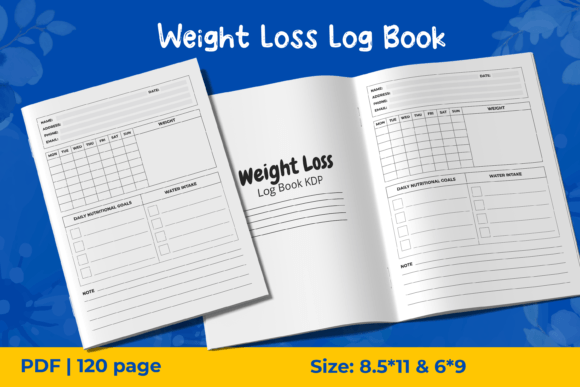
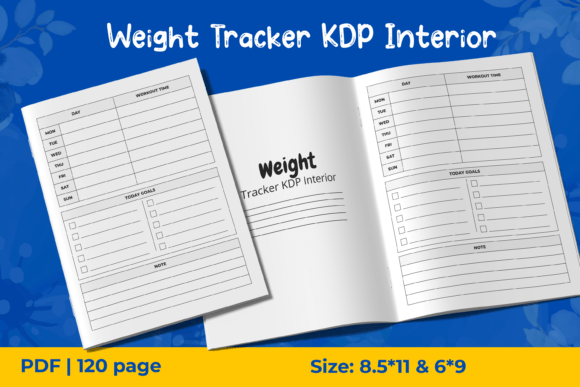
These are two of the most popular trim sizes on KDP. The 8.5" x 11" format (similar to standard US letter paper) offers ample space for detailed entries, charts, and weekly summaries. It’s ideal for users who want a comprehensive log, perhaps including meal plans or exercise sketches. The 6" x 9" size provides a more traditional book feel, often more portable and comfortable for daily journaling. Offering interiors in both sizes caters to different user preferences, expanding your product’s market fit.
High-Resolution, 300 DPI, Print-Ready PDF
DPI (dots per inch) refers to print resolution. For text and line-based interiors like a tracker, 300 DPI is the gold standard for crisp, sharp printing. Any lower resolution can result in fuzzy text or grainy lines, which is unacceptable for a product meant for daily handwriting. “Print-Ready” means the PDF is configured correctly for KDP’s printing system—with proper color space (typically black & white or grayscale for interiors), embedded fonts if used, and no missing elements. This eliminates formatting surprises after upload.
The Critical Element: Bleed
The note “Interior is with BLEED" is essential for any design where elements (like borders, section backgrounds, or page decor) extend to the very edge of the page. Bleed is an extra margin of design that extends beyond the final trim line. During printing and binding, pages are cut to size. Without bleed, a design meant to reach the edge could end up with a thin, unprinted white border. A file with proper bleed ensures those edge-to-edge elements print fully and professionally. Even for a primarily functional tracker, bleed matters if it includes any full-page graphical elements.
120 Pages: Structured Volume
A 120-page count offers substantial tracking duration—typically enough for a 6-month to year-long journey, depending on logging frequency. It provides value without being overwhelming. The interior should intelligently distribute this page count across sections: perhaps introductory goal-setting pages, monthly overviews, weekly spreads with daily logs, and summary pages at intervals. This structure guides the user naturally through the process.
Fitting into Modern Life: The Analog Solution in a Digital Age
In our technology-driven daily activities, the resurgence of analog tools like specialized journals is notable. A weight tracker book fits into modern life by offering a mindful pause. Unlike smartphone apps that buzz with notifications, a book requires intentional engagement. Writing down numbers and thoughts manually can enhance mindfulness and retention. It becomes a ritual, separate from the digital noise, dedicated solely to self-care. For many, this tangible connection is more motivating than a hidden icon on a screen.
Furthermore, these books serve in educational contexts—coaches or wellness educators might recommend them to clients as a foundational homework tool. In creative entrepreneurship, the KDP publisher is solving a practical problem with a beautifully simple product. The book bridges the gap between the desire for health and the discipline required to achieve it, fitting seamlessly into routines of morning reflections or evening recaps.
Clarifying Common Assumptions
Several misunderstandings can arise around KDP interiors. First, some may assume creating a usable interior is simply about making tables in a word processor. In reality, professional design software and knowledge of print specifications are needed to achieve the tested quality mentioned. Second, buyers might think all tracker books are essentially the same. However, the thoughtful layout—how much space is allotted per entry, whether it includes motivational prompts, the clarity of its charts—vastly differentiates a generic log from a transformative tool. Finally, for publishers, the assumption that uploading any PDF will work can lead to rejected uploads or poor print results. The emphasis on “Tested on Amazon KDP" is a direct answer to this, assuring that the file complies technically and delivers visually.
Examples of Natural Integration
Imagine a user, Sarah, who has set a goal to improve her fitness. She purchases a weight tracker book with a 6" x 9" interior. Each Sunday evening, she reviews the past week’s page: a clean two-column layout for daily weight and notes, a small graph at the bottom visualizing the week’s trend. She fills it in, seeing her consistency reflected on paper. The high-resolution printing means her pencil markings are clear against the sharp lines of the template. The 120 pages give her a tangible endpoint—a book to fill, a journey to complete.
For the publisher, Alex, who specializes in wellness tools, having a ready-made 8.5" x — x 11" interior with bleed means he can focus on marketing and cover design. He uploads the tested PDF, and within days, his product is live. He trusts the interior because it’s been validated, reducing his risk and allowing him to serve his audience with confidence.
Building a Broader Understanding: The Ecosystem of KDP Tools
A Weight Tracker Book Interior is part of a larger ecosystem of functional interiors for KDP—including habit trackers, meal planners, budget journals, and more. These products represent a growing niche where publishing meets practical utility. They underscore that books are not only vessels for stories or knowledge but can also be interactive frameworks for personal development. Understanding this shifts the perspective from viewing KDP solely as a platform for novels to seeing it as a marketplace for life-enhancing tools.
By choosing a professionally designed interior, publishers align with E-E-A-T (Experience, Expertise, Authoritativeness, Trustworthiness) principles. They demonstrate expertise in delivering a product that works correctly. They build trust with customers through reliable quality. The “helpful content” is literally the content of the book—its pages are designed to be genuinely helpful to the user’s goal. This creates a positive feedback loop: a satisfied user achieves better results, leading to positive reviews, which in turn helps more users discover this valuable tool.
In conclusion, a Weight Tracker Book for KDP Interiors, when crafted with attention to the critical details of dimensions, resolution, page count, and bleed, is far more than a template. It is a bridge between intention and action, a product that serves the pragmatic needs of the end-user while enabling the publisher to operate with efficiency and assurance. It embodies the practical relevance of publishing in today’s world—where a book can be a coach, a record, and a companion, all bound within 120 pages of clear, crisp, ready-to-use space.