Optimizing Health Tracking and Productivity with KDP Interior Books
For creators and entrepreneurs in the self-publishing space, having a portfolio of reliable, print-ready resources is a cornerstone of a sustainable business. Two distinct yet complementary products, like a Blood Sugar Logbook - KDP Interiors and a daily planner notebook, serve not just as individual items for sale, but as integral tools within a broader creator workflow. They represent a practical approach to fulfilling market needs—one focused on health management, the other on productivity—while utilizing the same efficient production process.
Understanding the Role of Interior Templates in Your KDP Workflow
The Blood Sugar Logbook - KDP Interiors is more than just a product listing; it is a designed, complete interior template. It fits into the assembly and fulfillment stage of your publishing process. After you have identified a profitable niche—in this case, the health and wellness market—your next step is sourcing or creating the content. This interior file provides that content in a finalized, structured format, eliminating the need for design work from scratch. It arrives as an editable AI file alongside PNG and PDF versions, meaning you can adjust details if needed or upload the PDF directly for a truly print-ready book. This shifts your effort from creation to customization and marketing, a significant efficiency gain.
Preparing for Publication: The Practical Setup
Before uploading a book like the blood sugar logbook, your preparation involves a few key checks. The file is specified as Letter size (6 in x 9 in) with no bleed, which are critical parameters for KDP's printing system. Ensuring your uploaded PDF matches these exact dimensions prevents formatting issues and customer complaints. Since the interior is provided as a 120-page structured log, you must consider the cover design separately. This separation of tasks—using a pre-made interior and pairing it with a commissioned or template-based cover—is a common and effective workflow for many KDP publishers. It allows for rapid scaling, as you can apply similar steps to the daily planner notebook and other books in your profile.
Integrating Health and Productivity Products into a Cohesive Business
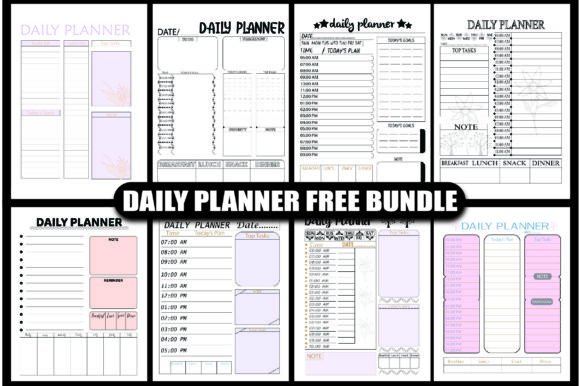
Offering both a health-specific logbook and a general daily planner speaks to a strategic understanding of customer segments. The workflow for managing these products is largely parallel. Both utilize the same technical specifications (Letter size, no bleed, print-ready PDFs), which simplifies your quality control process. You develop a consistent checklist for uploads: verify page count, confirm size, review the PDF for any visual errors, and ensure the cover file is compatible. This consistency reduces errors and builds reliability in your brand, a key factor for long-term success on platforms like Amazon.
From a customer's perspective, these books interact with other tools and life systems. A Blood Sugar Logbook - KDP Interiors is used alongside glucometers, doctor's advice, and dietary plans. It serves as the central paper-based repository for daily readings, meals, and notes, aiding in personal health oversight. The daily planner notebook, conversely, integrates with digital calendars, project management tools, and goal-setting frameworks. It might be the physical capture point for daily tasks before they are digitized, or the main tool for someone preferring an analog system. By offering both, you cater to different aspects of the same customer's life—organization for health and organization for work—which can increase cross-selling opportunities within your store.
Execution Tips for Smooth Implementation
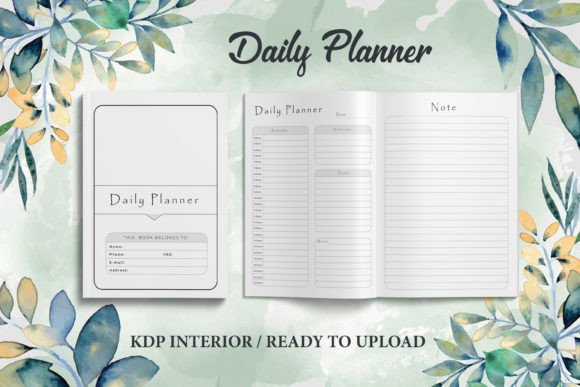
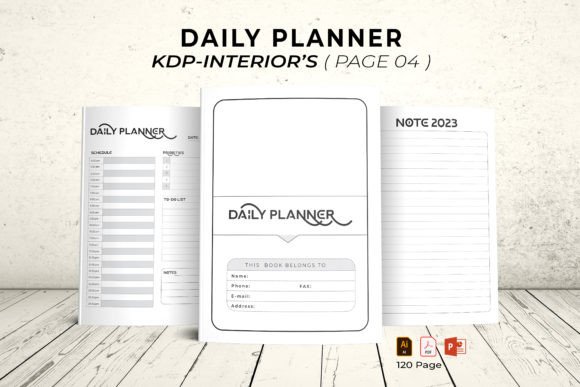
To integrate these interiors smoothly into your publishing routine, treat them as modular components. Upon purchasing or downloading the files, immediately open the PDF in a viewer to inspect the layout. Check the page sequencing: does the logbook have clear sections for date, time, reading, and notes? Does the planner have adequate space for hourly planning or to-do lists? This usability review is a crucial step before you commit to using the file. For the AI file, if you possess design software like Adobe Illustrator, you can make minor alterations—perhaps changing a header font or adding a small graphic—to further customize the book and differentiate your version from others. This level of customization enhances the product's value without demanding full-scale design work.
Long-Term Use and Portfolio Expansion
A sustainable KDP business isn't built on a single title. The mention of finding more KDP books and T-Shirts in the designer's profile highlights the importance of a diversified portfolio. The workflow for managing multiple interiors becomes a cycle of: market research, select interior, customize/verify, create cover, upload, market. Using reliable, pre-designed interiors like these for core products (logbooks, planners, journals) frees up your time and resources to focus on more complex projects or on marketing efforts. Over time, you can develop a library of such trusted interior files, each corresponding to a proven niche, which drastically reduces the time-to-market for new publications.
Quality control for long-term use involves maintaining consistency. If the blood sugar logbook interior uses a specific table style, and you modify it, consider applying a similar aesthetic to your planner interior for brand cohesion if they are sold under the same author name. Furthermore, storing these original files in an organized cloud directory, with clear naming conventions (e.g., "Blood_Sugar_Log_Interior_Final_PDF"), ensures you can re-use them or refer back to them if you need to create updated editions or companion guides. This organizational habit is vital for professional publishers managing dozens of active titles.
Observing Customer Outcomes and Iterating
Finally, the practical implementation of selling these books is validated by customer outcomes. A well-designed blood sugar logbook helps a user track patterns over 120 days, potentially leading to better health insights. A daily planner aids in task completion and goal progression. As a publisher, you can use customer reviews and feedback not just for the specific product, but to understand broader needs in the health tracking or productivity niches. This feedback loop can inform which new interior templates you seek out next. Perhaps after noticing requests for "weekly meal planners alongside blood sugar logs," you might look for or commission a complementary interior that fits that adjacent need, thereby expanding your business logically and based on real user data.
In essence, products like the Blood Sugar Logbook - KDP Interiors and daily planner notebook are executable components within a larger publishing system. They arrive ready for integration, demanding not creative design labor, but publishing acumen—the ability to correctly package, list, and market them. By mastering the workflow around such ready-to-use assets, you build a business that is both efficient and scalable, capable of serving diverse customer needs while maintaining a high standard of product readiness and reliability.