Evaluating the Mood Tracker - KDP Interiors and Daily Planner for Your Publishing Business
The landscape of Kindle Direct Publishing (KDP) offers significant opportunities for creators, but success often hinges on providing well-designed, functional products. Among the myriad of available interior templates, the Mood Tracker - KDP Interiors and Daily Planner notebook represents a specific category aimed at the self-improvement and wellness niche. This analysis will explore this product bundle, its potential applications, and key considerations for KDP publishers looking to add such items to their catalog.
Understanding the Product Bundle
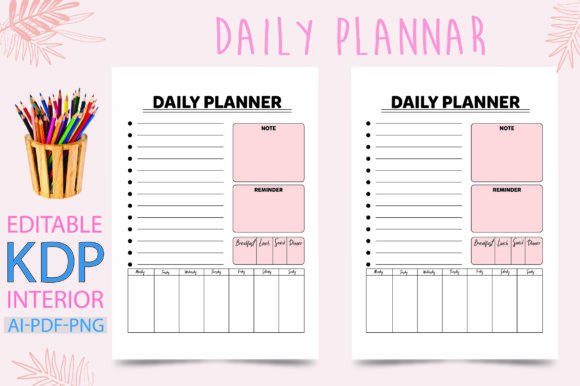
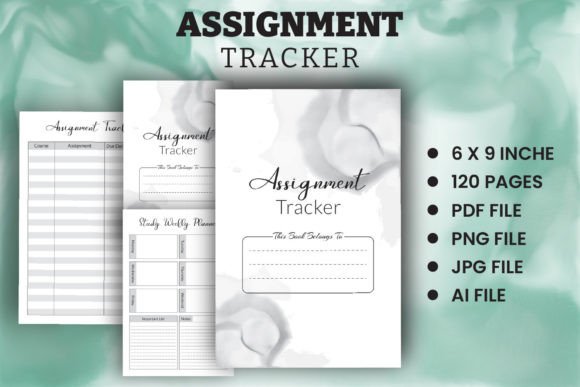
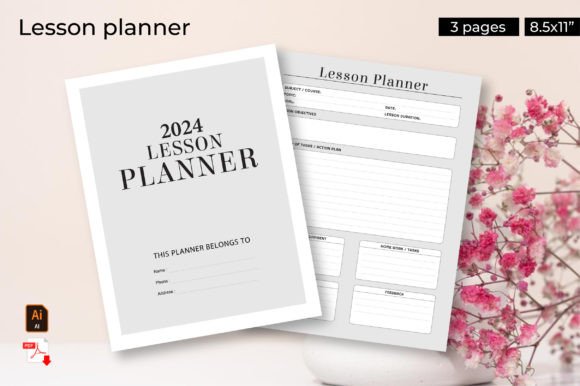
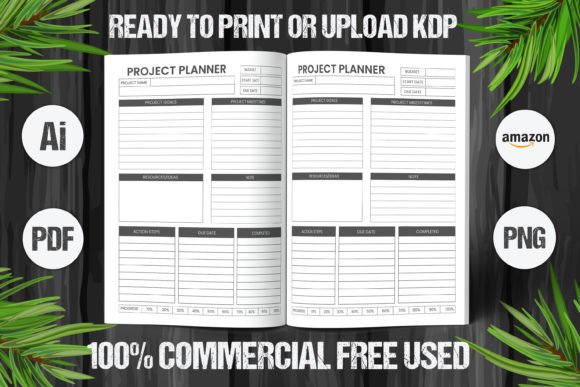
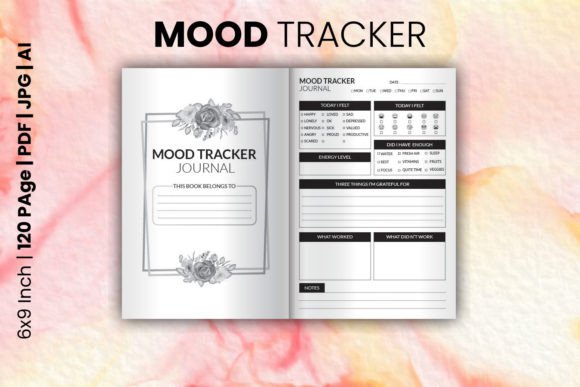
This offering consists of print-ready interior files designed for physical notebook publication via KDP. The core product is a combined mood tracker and daily planner, formatted for a 6x9 inch Letter size book. The provided files include editable source formats (like AI), alongside final PNG and PDF versions, totaling 120 pages. A critical specification is the "no bleed" design, meaning the content does not extend to the edge of the page, simplifying the printing and trimming process. The bundle is presented as a tool to aid publishers in their KDP business by supplying ready-to-use designs.
Potential Benefits and Value Proposition
For a KDP publisher, particularly one operating in the journal, planner, or wellness space, this bundle presents several tangible benefits. The primary advantage is time efficiency. Designing a 120-page interior with consistent layouts for mood tracking and daily planning requires considerable effort. Having editable, print-ready files can drastically reduce the time from concept to a product ready for upload on KDP.
The inclusion of multiple file types (AI, PNG, PDF) offers flexibility. The AI files allow for customization—altering colors, fonts, or minor layout elements to create a unique variation that still leverages the core structure. The PDF and PNG files provide a straightforward, no-edit path to a finished product, ideal for publishers who wish to launch a product quickly without graphic design expertise. The no bleed design further reduces technical hurdles, as it aligns with a simpler print setup.
Key Features and Their Implications
- Editable AI Files: This is a significant feature for publishers with access to Adobe Illustrator or similar software. It allows for brand alignment, customization for specific sub-niches (e.g., anxiety management, productivity), and the creation of multiple derivative products.
- 120 Pages: This page count offers a substantial product perceived as value by end consumers. It provides ample space for extended use, but publishers should consider print cost implications, as more pages increase the manufacturing cost per unit.
- 6x9 Inch, Letter Size, No Bleed: This is a standard and popular trim size for journals and planners. The no bleed specification means the publisher does not need to manage complex margin and safety zone calculations, reducing a common point of error for newcomers.
Trade-offs and Considerations
While the bundle offers convenience, publishers must weigh several considerations. First is market saturation. The wellness and planner niche on KDP is highly competitive. Using a commercially available interior template, even with customization, may result in products that resemble others in the marketplace. Differentiation then becomes reliant on cover design, marketing, and perhaps minor interior tweaks rather than a wholly unique interior.
The dependency on the template's structure is another factor. The combined mood tracker and daily planner layout is fixed. If the target audience research suggests a demand for a standalone mood tracker without daily planning elements, or a planner with a different tracking methodology (like habit trackers), this bundle may not perfectly fit that need. The editable files offer some remedy, but major structural changes could require substantial redesign work.
Finally, the business model of using pre-made interiors involves an upfront cost (or is offered as part of a designer's portfolio). Publishers must evaluate whether the potential revenue from the resulting book justifies this cost or if investing time in learning basic design to create truly unique interiors yields a better long-term return.
Situations Where This Bundle Is a Strong Fit
This Mood Tracker - KDP Interiors bundle aligns well with specific publisher profiles. It is an excellent fit for KDP entrepreneurs new to the journal/planner niche who want to validate the market with a professional-looking product without months of design learning. It also suits publishers who have established a brand in adjacent niches (e.g., fitness journals, mindfulness books) and wish to expand their catalog into mood tracking with a swift, reliable product launch.
Furthermore, it serves publishers who possess the skill to customize the AI files effectively. A designer can rapidly produce a suite of color-themed or topic-specific variations (e.g., "Mood Tracker for Students," "Anxiety & Peace Planner"), maximizing the value of the core template and building a cohesive product line.
When Alternatives Might Be Worth Considering
Publishers with specific, research-backed visions for their interior layouts might find this bundle limiting. If the goal is to create a highly innovative planner with unique page interactions or a niche-specific tracking system not covered by a standard mood tracker, investing in custom design from scratch or commissioning a bespoke interior might be a more appropriate path.
Additionally, publishers focused on the absolute lowest possible print costs might consider shorter page counts. While 120 pages offers value, a 60-page or 90-page version of a similar concept could be more cost-effective to produce, allowing for lower retail prices or higher margins. Creating such a product would require separate design work, however.
Finally, for those aiming to build a distinctly recognizable brand where interior design is a key unique selling point, reliance on widely available templates can be a strategic drawback. In such cases, developing proprietary interior designs becomes a core business investment.
Practical Decision-Making Insights
To determine if this product aligns with your KDP goals, conduct a simple analysis. First, audit the current KDP marketplace for "mood tracker" and "daily planner" books. Examine their interiors, page counts, and bestseller rankings. Does this bundle allow you to create a product that can compete or fill an observed gap? Second, honestly assess your resources. Do you have the time to design 120 pages yourself, the budget to hire a designer for a custom job, or the skills to customize the provided AI files? The bundle sits in the middle, offering a compromise between cost, time, and uniqueness.
Consider your long-term strategy. Is this a one-off product to test a niche, or the foundation for a series? The editable nature of the Mood Tracker - KDP Interiors supports series creation. Ultimately, the decision hinges on balancing speed-to-market against product differentiation and aligning the output with verified consumer demand within the wellness and productivity planner categories.
By evaluating these aspects objectively, you can make an informed choice on whether utilizing this ready-made interior bundle is a practical step forward in your KDP business journey or if your goals necessitate a different approach to product development.