The Art and Utility of KDP Interiors for Tarot Journaling
In the world of self-publishing and personal spiritual practice, the tools we use can significantly enhance our experience and output. For those exploring tarot, a journal is more than a notebook; it is a structured space for reflection, learning, and tracking intuitive growth. The physical design of this journal, its pages and layout, plays a crucial role in this process. This brings us to the specialized niche of Tarot Journal KDP Interiors Designs, which serve as the architectural blueprint for these personal repositories.
Understanding the Foundation: KDP Interior Files
KDP, or Kindle Direct Publishing, is Amazon's platform for authors and creators to publish both eBooks and physical print books. While often associated with novels, it is equally powerful for journals, workbooks, and other interior-focused products. A "KDP Interior" refers to the complete set of designed pages that make up the inside of a printed book. For a tarot journal, this isn't merely a sequence of blank pages. It involves carefully considered layouts, sections, and graphical elements that guide the user.
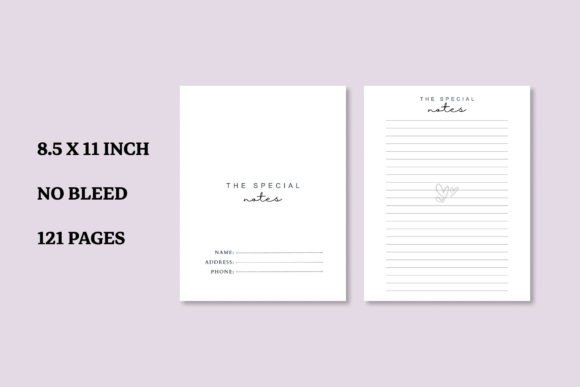
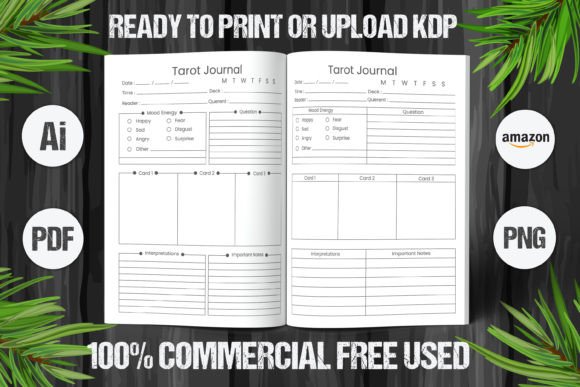
These designs are provided as digital files, fully prepared for the print-on-demand process. The typical package, as mentioned, includes versatile formats: an editable Illustrator AI file for professional customization, a high-resolution PDF for flawless printing, and PNG files for individual page inspection or alternative uses. The dimensions, such as the standard 8.5" x 11" inch size with no bleed, are precisely set to match KDP's paperback trim size requirements, ensuring the final product looks professional and intentional.
The Composition of a Tarot Journal Interior Design
A well-designed Tarot Journal Interior goes beyond aesthetics. It functionally supports the tarot practitioner's workflow. Common elements integrated into these 120-page designs might include:
- Dedicated card logging pages with areas for card name, date, imagery notes, personal interpretation, and key symbolism.
- Theme-based sections for tracking readings focused on love, career, personal growth, or shadow work.
- Monthly or cyclical review pages to observe patterns and progress over time.
- Guided prompts for beginners to deepen their understanding of suits, arcs, and numerology.
- Clean, minimalist spaces for free-form drawing or writing, allowing intuition to flow without restrictive boxes.
- Reference pages for quick glances at card meanings or spread diagrams.
The emphasis on high-resolution files ensures that any delicate line art, subtle textures, or symbolic borders print crisply, maintaining the serene and focused quality essential for a contemplative tool.
Primary Users and Their Practical Applications
The audience for these designs is broad, but their application is specific. Hobbyists and new tarot enthusiasts benefit immensely from the structured guidance. The pre-formatted pages reduce the intimidation of a blank journal, providing a scaffold that encourages regular practice without the overhead of designing pages oneself. For seasoned readers and professionals, these interiors offer a systematic way to document client readings or personal daily draws, creating a valuable archive that can be referenced for patterns or client history.
Creators and business owners, particularly in the spiritual, wellness, or publishing sectors, are another key group. The availability of a fully editable Illustrator AI file is a significant advantage. It allows a brand to adapt the design—changing colors, fonts, or layout elements—to match their specific aesthetic or to incorporate proprietary symbolism. This means a creator can produce a unique product under their own brand name without starting from absolute zero, leveraging a professional base template.
Educators running courses on tarot or mindfulness might utilize these journals as companion materials for their students. The consistent structure helps students follow a unified method of study, making group discussions and progress tracking more coherent.
The Critical Advantage of Editability and Print-Ready Files
The feature "Fully Editable Design" is not a minor point. In the digital creator economy, flexibility is power. The Illustrator AI file allows for changes at the vector level, meaning scalability and quality are preserved indefinitely. One can add a logo, modify a header, or even translate text into another language while keeping the design integrity. This separates these products from static, non-editable PDFs that are merely for printing.
Simultaneously, the inclusion of 100% print-ready PDF and PNG files addresses a different need: immediacy and reliability. For users who are satisfied with the design as-is and wish to launch a product on KDP quickly, these files are formatted precisely. The "No Bleed" specification indicates the design fits safely within the page margins, which is perfect for interiors where full-bleed artwork isn't required. This eliminates a common technical hurdle for new publishers.
Real-World Considerations for Implementation
While the advantages are clear, successful implementation requires some consideration. The choice of the 8.5" x 11" inch size, for instance, offers ample space for writing but results in a larger journal. Some users might prefer a more portable size, which would require resizing the design—a task made possible by the editable file but requiring some design software skill. The 120-page count is a substantial length, providing months of daily use, but creators should consider their audience's needs; a shorter journal for a specific 30-day challenge could be derived from the same master files.
The design's content itself must resonate. A Tarot Journal Interior filled with overly complex artistic elements might distract some users, while a too-minimalist design might not inspire enough. The ideal designs strike a balance, offering gentle visual guidance without overcrowding the user's own thoughts. Observing successful journals in the market shows that those with clear, legible typography, intuitive section breaks, and a touch of evocative, non-distracting artwork tend to be most favorably reviewed.
Furthermore, from a publishing standpoint, using these interiors directly on KDP is straightforward, but creators must still attend to the platform's requirements for cover design, ISBN assignment, and pricing strategy. The interior is one critical component of a complete product.
The Broader Context: Journals as Tools for Integration
Tarot Journal Interiors designs, especially those crafted for KDP, represent a maturation of the tarot practice into a tangible, documented discipline. They move the experience from a transient card reading to an integrated study. This documentation allows for a unique meta-analysis: over time, a practitioner can look back through their journal and see not only how their interpretations of cards evolved, but also how their own life events correlated with their readings. This creates a feedback loop that deepens both self-knowledge and tarot proficiency.
For the creator economy, these designs exemplify a trend towards modular, customizable digital products. They provide the infrastructure, allowing entrepreneurs to focus on branding, marketing, and community building rather than the minutiae of page layout design. This efficiency enables more people to participate in creating valuable tools for niche communities.
In essence, Tarot Journal KDP Interiors Designs are more than just digital files. They are a confluence of spiritual practice needs and modern self-publishing technology. They empower the end-user with a beautiful, functional tool for introspection, and they empower the creator with a flexible, professional asset for building a business. By understanding their characteristics—the editable source files, the print-ready outputs, the thoughtfully considered layouts—one can appreciate their role in supporting both personal journeys and creative ventures in the evolving landscape of mindful publishing.